The world keeps shopping for Russian tennis talent. Here-s why
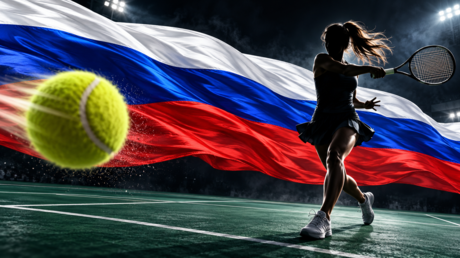
The world keeps shopping for Russian tennis talent. Here-s why
An insider explores the depth of Russia’s tennis school and the reforms that could give its next generation an even stronger start
My friends and relatives would tell me how lucky I was to work with professional tennis players. People, especially sports journalists, tended to lean over and whisper to me that my job was a dream. I replied, more nightmare than dream.
The Porsche Tennis Grand Prix, in Filderstadt, near Stuttgart in Germany, is German tennis’ moment to shine and 15 years ago I was there looking after one of our company’s clients who’d made the final. Sitting in the player’s lounge, having a snack, Danish star Carolina Wozniacki came over for a chat. She was carbing up for a semi-final with Poland’s Radwanska, and remarked how one Russian player who’d lost earlier in the tournament was still hanging around and carbing up.
She can beat anyone in the world, she just needs to control her diet, the great Dane said with a very serious face. I glanced over at the young woman in question and wondered just how many pieces of rich, tasty chocolate cake she needed on her plate. I knew, however, that she was just one of many who progressed through a chaotic tennis system that wasn’t fit for purpose.
Burning out talentThe heavy focus on training and playing has cost more top Russian talent successful careers than lack of funds to play tournaments or anything else. And after 1991, Russian tennis was over the top in this regard. Too many youngsters suffered physical and mental burn out.
It’s important to remember they are kids, Russia-born, Serbia Fed Cup team player Vesna Dolonc told us on Capital Sports last year. Burn out is very real and parents, too, need to take care of it.
Vesna, a talented Russian junior who chose to play for her father’s country, made the main draw in all Grand Slams and after winning eight professional titles retired in 2017 to focus on coaching. Her view is that there are hugely talented kids and coaches in Russia, though there needs to be focus on the whole person.
Vesna Dolonc during day three of the 2014 Australian Open at Melbourne Park on January 15, 2014 in Melbourne, Australia. © Chris Hyde / Getty Images It’s something that Melik, father of retired Russian tennis ace Margarita Betova (née Gasparyan) pointed out when I worked with his daughter for a short stint in 2011-12.
They [national team coaches] made her play when she had one leg, when she was barely able to stand and then complain [when] she loses, he told me at our first meeting.
Read more Later, as we sat watching her at the 2012 Kremlin Cup, he blamed the battle for finance as the main cause.
The [Russian tennis] federation has not enough money to give all young [players], so everyone kills themselves to win and play, even when they’re hurt.
That was then, when so many young Russian women who were superb on the junior circuit just fell away before making the top-100. Some players found alternative paths to success and support.
SpreadingSince and including 2011 there have been no fewer than six Russian players in the world’s top-100 at the end of each year. It has steadily increased since 2022, with 13 in the leader list from 2023-25. Ten Russian women are currently in the top-100. And there is an asterisk to put in there.
That does not include Russia-born players who are serving other countries, like Elena Rybakina. The Muscovite was the latest talent to fly the Kazakhstan flag with full funding, coaching, and support team guaranteed. Ditto World number 50, Anastasia Potapova, who switched to Austria, and it seems an annual occurrence when another nation, like Australia, Uzbekistan, or France snap up a graduate of the Russian tennis system.
Elena Rybakina in the Women's Singles First Round during day three of the 2026 Australian Open at Melbourne Park on January 20, 2026 in Melbourne, Australia. © Clive Brunskill / Getty






 27.1c
27.1c