Nuremberg at 80: How do you put a death machine on trial?
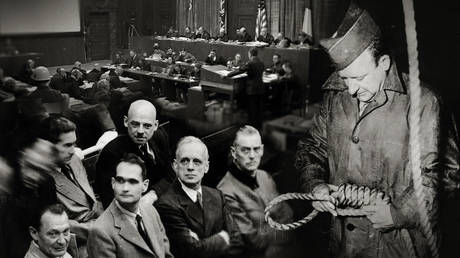
Nuremberg at 80: How do you put a death machine on trial?
A courtroom gave the defeated Reich’s leaders a chance to defend themselves and the world a record of crimes they could no longer conceal
On the night of October 16, 1946, 10 individuals were hanged in the Nuremberg prison. These were the main Nazi criminals who had been captured and brought to trial.
Despite the horrifying scale and brutality of the crimes, the Nuremberg Trials remain one of the most controversial proceedings in world history.
Justice instead of revengeThe idea of an international tribunal to address Nazi atrocities had been considered for some time. In 1942, the Soviet Union established a special Extraordinary Commission that gathered information about these crimes. Tragically, it had a lot of work to do. The USSR became the primary battleground for the bloodiest and most brutal war in Europe.
The range and nature of the crimes committed on Soviet soil were staggering: genocide against multiple peoples, mass killings on various grounds, all sorts of war crimes, deliberate attacks on medical facilities and civilian infrastructure, arbitrary executions, economic exploitation, and sexual violence. Essentially, every town liberated from the Nazis had enough evidence to warrant its own tribunal. When the concentration camps were liberated, it became clear that Allied propaganda had not exaggerated but rather understated the extent of Nazi atrocities.
In addition to the Soviet government, the exiled governments of occupied countries – Belgium, Czechoslovakia, Luxembourg, the Netherlands, Poland, Norway, France, and Yugoslavia – also wanted to hold the Nazis legally accountable for their crimes.
The outlines of the future tribunal began to take shape in the fall of 1943 during a conference in Moscow attended by the foreign ministers of the ‘Big Three’ – the USSR, the UK, and the US. The three powers agreed that Nazi leaders who committed crimes across multiple nations should be tried by an international court.
At that time, even the idea of lynching Nazi leaders seemed valid. Benito Mussolini was executed along with his mistress by Italian partisans on April 28, 1945, without any trial. Their mutilated bodies were publicly displayed. No one mourned Mussolini; similarly, no one would have objected if a Red Army soldier had shot Hitler.
Mussolini's corpse hanged at Piazzale Loretto after his execution in Milan in 1945. © Keystone-France / Gamma-Keystone via Getty Images Sporadic acts of vigilante justice also occurred as the war neared its end. A well-known incident involved American soldiers executing the staff of the Dachau concentration camp. Polish troops beat to death Oscar Dirlewanger, the commander of a punitive brigade responsible for countless deaths in Belarus and Poland.
Yet vigilante justice was not what the Allied leaders envisioned.
The men in the dock – and those who escaped it Read more It became clear that the crimes committed were not only widespread but complex. Determining individual responsibility was not always an easy task. The Nazis had taken measures to conceal their atrocities whenever possible; for example, they buried the remains of over 100,000 people, mostly Jews, after executing them at Babi Yar ravine near Kiev. Furthermore, once the Reich collapsed and arrests began, everyone began shifting blame onto one another, particularly onto those who had already died.
By April and May of 1945, most of the individuals who would eventually be tried at Nuremberg had been apprehended. Of course, many key figures were never tried.
For obvious reasons, Minister of Propaganda Joseph Goebbels and Hitler himself were absent from the trial: both had committed suicide before they could face justice. Heinrich Himmler, the head of the SS, was captured by two freed Soviet prisoners, yet during a medical examination, he swallowed a poison capsule and died. Heinrich Müller, the leader of the Gestapo, likely shot himse






 15.2c
15.2c